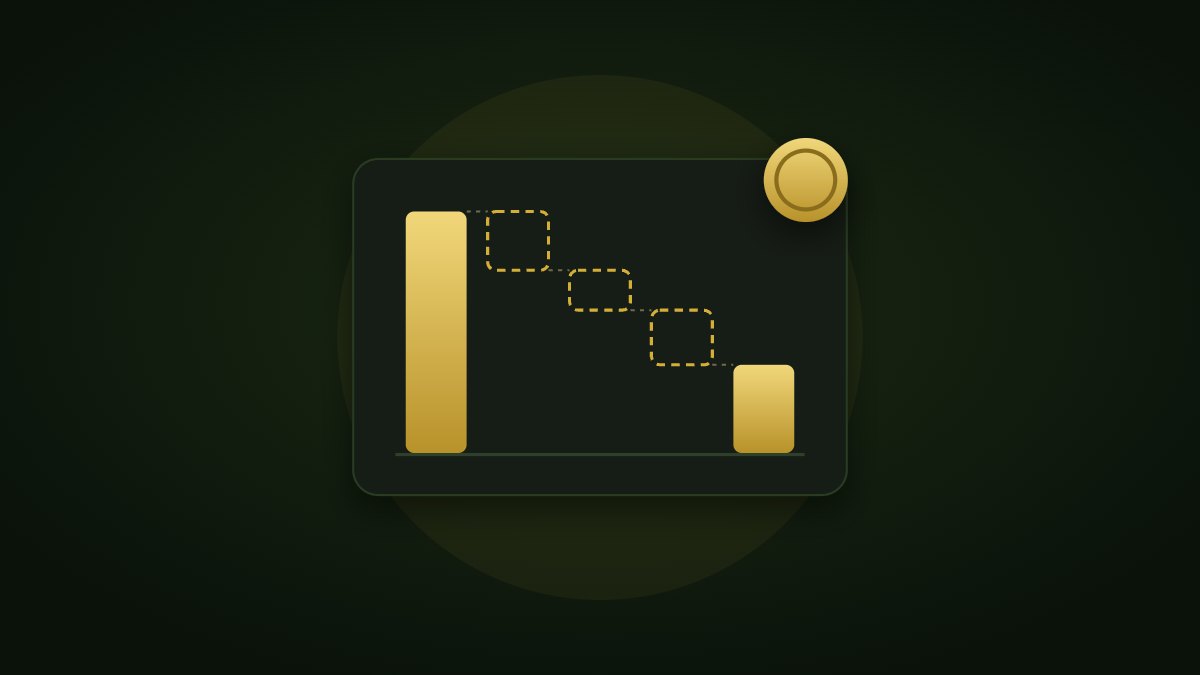
Most creators who miscalculate didn't earn too little. They looked at the wrong number.
Prefer to grow with a team behind you? Apply free – takes 2 minutes →
Picture a Sunday evening. You open your stats, see a decent monthly total and think: good, I can plan with that. New lighting, new equipment, maybe quitting the day job. Three weeks later a payout arrives that's smaller than expected, and the maths starts over in your head.
My thesis: if you take your creator business seriously, you separate four numbers from day one: what fans paid, what the platform credits to you, what lands in your bank account, and what is actually left after tax and costs. Anything else is mood, not planning.
What's evidenced, and what isn't
I keep three things apart in this text:
- Evidence: statements I checked in the OnlyFans Terms of Service (sources below, as of 8 November 2026).
- Opinion: how I interpret those facts.
- Assumption: examples I construct myself for illustration. They are not experience values and not promises.
Number 1: What fans paid
This is the figure your dashboard likes to put front and centre. It feels good because it's the biggest. For planning, it's the least useful.
Evidence: The terms state that the platform's fee for creator interactions is 20% of the total user payment and is deducted from each payment. So it isn't an item that shows up at the end of the month – it's built in from the start.
Opinion: If you calculate in your head with the fan payment, you're gifting yourself money that was never yours.
Number 2: What gets credited to you
The terms call this "Creator Earnings": the portion of a payment due to a creator after fees are deducted and relevant tax is applied.
Assumption (pure example): A fan pays 100 euros. At a 20% fee, roughly 80 euros is the basis you can keep working with (before taxes and currency conversion). Not 100.
It sounds trivial. But this is where mistakes happen: if you plan expenses, goals or prices from the gross figure, you start a fifth too optimistic. That's not a detail; it's the difference between "fine" and "tight".
Number 3: What arrives in your account
Between credit and bank deposit there are more places where things can change. The terms mention several:
- Minimum payout: your balance has to reach a minimum payout amount before you can withdraw. Anything below waits.
- Currency: payments and earnings are typically transacted in USD. If a payout needs conversion, conversion fees and exchange rates apply.
- Bank: your bank may charge its own fees for international transfers or currency handling. According to the terms, these are outside the platform's control and are your responsibility.
- Chargebacks: if a fan successfully obtains a refund or chargeback from their payment provider, the platform may deduct the corresponding creator-earnings portion.
Opinion: The last one is underrated. Money that was already credited can disappear later. If you spend every cent the day it's credited, you're treating a provisional number as final. Keep a buffer you don't count as "available".
Number 4: What's left after tax and costs
I often hear two extremes: "it's just a side thing, nobody will notice" and "I'll sort it out later when it grows." Both are expensive, for different reasons.
Evidence: The terms say creators are responsible for their own tax affairs, and the platform neither gives tax advice nor is liable for a creator's non-payment of tax. As a creator you also warrant that you have reported, and will report, all payments received through OnlyFans to the relevant tax authority, as required by law.
I'm not giving tax advice here, nor a calculation of what you owe. That depends on your country, your situation and current rules, and you clarify it with the competent authority or a tax professional. The attitude I'll hand you: treat tax as a fixed cost line, not a surprise. If you keep income separate from the start, you at least know what you're talking about later.
The same goes for costs: equipment, software, travel, subscriptions. Whether and how you can deduct something is a question for the authority. Whether you wrote it down is on you.
Three habits that beat any pricing hack
1. One spreadsheet, four columns. Date, fan payment gross, credit, payout to bank. Nothing more is needed at first. You'll see how far apart the columns sit.
2. A separate account for the business. Not because anyone demands it, but because otherwise your brain pays groceries, rent and equipment from one pot and can't tell at month-end what was actually earned.
3. Plan with the smallest number. Calculate expenses and goals from what remains after fee, possible exchange-rate effects and a buffer. If more comes in, it's a good month. If less, you're not in a panic.
Why this is more than bookkeeping
If you understand the numbers, you negotiate differently. That applies to prices, to breaks, and to decisions like: is a shooting setup worth it? Do I need help with chat or planning? You can only judge that if you know what's really left at the end – not what looks biggest on the dashboard.
And yes: in any collaboration, whether with an agency or a freelancer, exactly this question belongs on the table. Not "how much revenue could this bring?" but "which number does the agreement refer to – fan payment, credit or payout?" If you don't ask, you're negotiating over a number you don't understand. Always get agreements in writing and read them before you sign.
What I can't tell you
I can't tell you how much you'll earn. Nobody can, seriously. Platform, niche, time invested, luck and the state you're in all play a part. Anyone who promises you a figure is selling you something.
What I can say: the 20% fee can be read in the terms. Currency conversion, bank fees and chargebacks are mentioned there too. And tax, per the same terms, is your responsibility. That's not doom-mongering; it's the ground you decide on.
In short
- The dashboard number is a starting point, not income.
- Per the terms, a 20% platform fee is deducted from the start.
- Conversion, bank fees, minimum payout and chargebacks can sit between credit and bank.
- You clarify tax and costs with the competent body, but you keep the records yourself.
- Plan with the smallest realistic number.
If you take away one thing: give the four numbers four names. Once you can tell them apart, you stop being led by the biggest one.
This post is not legal, tax or financial advice.
Sources
- OnlyFans Terms of Service (sections Creator Earnings and Tax compliance), retrieved 8 November 2026: https://onlyfans.com/terms